
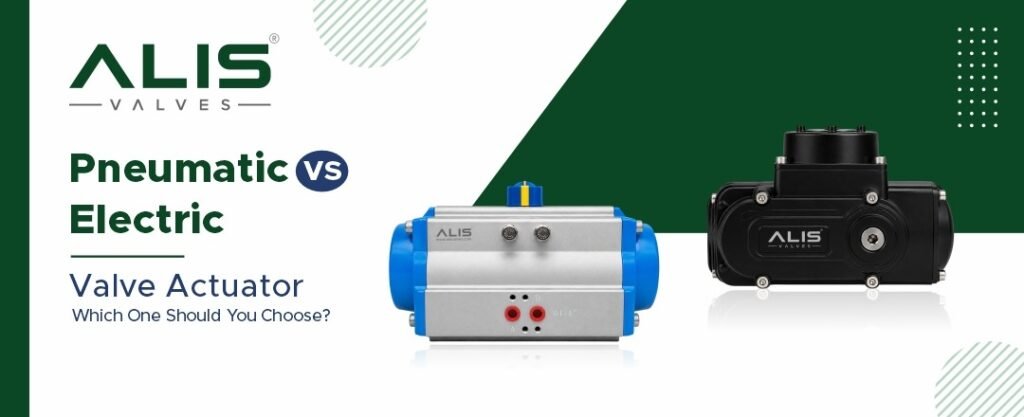
Choosing between a pneumatic and an electric valve actuator depends on more than the purchase price. The right choice can affect valve response time, process control, maintenance requirements and the reliability of an automated system.
Both actuator types are used to operate industrial valves remotely. However, they work differently and suit different operating conditions. Pneumatic actuators use compressed air to produce movement, while electric actuators use an electric motor and a mechanical drive system.
For engineers and purchase teams comparing a pneumatic vs electric valve actuator, the main factors are required torque, operating speed, available utilities, fail-safe requirements, control accuracy and the environment in which the valve will operate.
This guide explains the practical differences and how to select the right actuator for your industrial application.
How Does Pneumatic Valve Actuator Work?
A pneumatic valve actuator converts compressed-air pressure into mechanical movement. Depending on its design, that movement operates a valve through a rotary or linear mechanism.
For quarter-turn valves, such as ball valves and butterfly valves, the actuator normally rotates the valve stem through approximately 90 degrees.
Two common configurations are:
Double-acting pneumatic actuator: Compressed air is supplied to operate the actuator in both directions. The valve opens and closes using pneumatic pressure.
Spring-return pneumatic actuator: Air pressure moves the actuator against a spring. When the air supply is lost, the spring returns the valve towards its designated fail-open or fail-closed position, provided the assembly is correctly configured.
A pneumatic valve actuator converts compressed-air pressure into mechanical movement to operate a valve. Depending on the design, it can provide rotary or linear movement for different industrial applications. Actuator selection depends on the required torque, air pressure, operating frequency and valve configuration. For a better understanding of available designs, explore pneumatic actuator technology and its applications in industrial valve automation.
Advantages of pneumatic actuation
- Fast operation is possible when the actuator, air supply and valve are correctly sized.
- Spring-return options can provide a defined response to loss of air.
- Pneumatic systems are widely used in industrial process plants.
- Suitable designs can handle frequent operating cycles.
- They can be integrated with solenoid valves, positioners, limit switches and air filter regulators.
However, pneumatic operation requires a suitable compressed-air supply. Air quality, operating pressure, tubing, fittings and accessories all affect performance.
Explore ALIS Valves’ Pneumatic Actuator solutions for industrial valve automation.
How Does Electric Valve Actuator Work?
An electric actuator uses an electric motor and a transmission mechanism to operate a valve. Depending on the design, it can provide quarter-turn, multi-turn or linear movement.
For example, an electric quarter-turn actuator can operate a compatible ball valve or butterfly valve. A multi-turn actuator can be used for valve designs that require multiple rotations, subject to the valve’s operating requirements.
Electric actuators are available with different power supplies, control modes and feedback options. Some models support remote commands, position feedback and integration with PLC or DCS systems.
An electric valve actuator uses an electric motor and a mechanical drive system to operate a valve. Depending on the model, it can support on/off operation, remote control or modulating service. Before selecting an actuator, check the valve’s torque requirements, operating duty, power supply and required control functions. You can also review electric actuator selection and applications for further technical information.
Advantages of electric actuation
- Does not require a plant compressed-air network.
- Can support remote operation and electrical control integration.
- Modulating models can provide position control when specified for that duty.
- Suitable for installations where electrical infrastructure is available.
- Certain models support digital communication and position feedback.
The selection must account for motor duty, starting frequency, torque, ambient conditions, enclosure protection and the required response to a power failure.
Explore ALIS Valves’ Electric Actuator solutions for industrial valve automation.
Torque, Speed and Power Supply Differences
These three factors often determine whether a pneumatic or electric actuator is more suitable.
Torque requirements
Torque is the rotational force required to operate a valve. It is not determined by valve size alone.
For a quarter-turn valve, the required torque can change with differential pressure, seat friction, packing friction, temperature, process media and the valve’s design.
The actuator must provide sufficient torque throughout the operating stroke, including the initial breakaway and final seating conditions.
Pneumatic actuator output depends partly on the available air pressure and the actuator mechanism. Electric actuator output depends on the motor, gearing and the model’s rated operating limits.
Engineering tip: Obtain the valve manufacturer’s torque data at the actual operating conditions before selecting an actuator. Include the manufacturer’s specified sizing margin rather than choosing an actuator based only on nominal valve diameter.
Operating speed
Pneumatic actuators can provide fast opening and closing, particularly in on/off applications. Actual travel time depends on actuator size, air pressure, air-line capacity, solenoid valve flow and the load imposed by the valve.
Electric actuator travel time depends on motor speed, gearing and the selected operating duty. Some electric actuators are designed for faster operation, while others prioritise controlled movement or modulating service.
The required closing time should also be considered where sudden closure could cause pressure surges or water hammer.
Power supply and site utilities
A pneumatic system needs compressed air at the pressure and flow rate specified for the actuator. If the plant already has a reliable instrument-air system, this may simplify installation.
An electric actuator requires a compatible electrical supply. Depending on the model, this could be AC or DC power. Wiring, protection, control signals and the installation environment must be considered.
The better option is the one that fits the site’s available utilities and operating requirements without creating unnecessary infrastructure or maintenance.
Fail-Safe Operation: Fail Open vs Fail Closed
Fail-safe operation is a critical consideration in many industrial processes.
A spring-return pneumatic actuator can be configured to move the valve towards a specified position when its air supply is lost. The required position depends on the process and the hazard analysis.
- Fail closed: The valve moves towards the closed position when the specified failure condition occurs.
- Fail open: The valve moves towards the open position when the specified failure condition occurs.
- Fail in place: The assembly is designed to retain its last position under a defined failure condition, where the selected configuration supports it.
An ordinary electric actuator should not automatically be assumed to provide fail-safe movement when power is lost. A suitable battery backup, capacitor, spring-return arrangement or other engineered solution may be required.
For emergency shutdown duties, specify the required action, response time, available backup energy, operating conditions and applicable safety requirements before selecting the complete valve-actuator assembly.
Which Actuator Is Suitable for Ball and Butterfly Valves?
Both actuator types can operate compatible ball valves and butterfly valves. The correct choice depends on valve torque, required control mode and the process application.
Pneumatic actuator for butterfly valves
Pneumatic actuation is often considered for butterfly valves used in automated isolation, frequent cycling and selected fail-safe applications.
The actuator must match the valve’s torque requirements at the specified differential pressure. Seat material, disc design, temperature and operating frequency can influence the selection.
Electric actuator for butterfly valves
Electric actuators are useful where electrical remote operation, integration with a control system or modulating control is required.
The selected model must be suitable for the required travel, torque, operating frequency and environmental conditions.
Pneumatic actuator for ball valves
Pneumatic ball valves are commonly considered for automated isolation and rapid switching in process systems. Spring-return configurations can be specified where a defined response to air loss is required.
Electric actuator for ball valves
Electric ball valves are useful where electrical operation and remote control are preferred. The actuator must be matched to the ball valve’s breakaway, running and seating torque.
Explore the ALIS Butterfly Valve range and confirm the actuator configuration required for your application.
How to Select the Right Valve Actuator
Before requesting a quotation, prepare the following information.
1. Valve details: Identify the valve type, size, pressure rating, end connection and operating mechanism.
2. Required torque or thrust: Obtain the manufacturer’s data for the actual operating conditions.
3. Operating mode: Specify on/off, modulating or another required control duty.
4. Operating time: Define the acceptable opening and closing time.
5. Failure position: State whether the valve must fail open, fail closed or meet another specified requirement.
6. Available utilities: Confirm air pressure and capacity or electrical supply, as applicable.
7. Control and feedback: Specify solenoid valves, limit switches, positioners, feedback signals and PLC/DCS integration requirements.
8. Environment: Identify ambient temperature, humidity, corrosion, outdoor exposure and hazardous-area classification where applicable.
9. Operating frequency: Confirm the expected number of operating cycles and the required duty rating.
10. Maintenance and lifecycle cost: Consider installation, utility consumption, maintenance access, spare parts and the consequences of downtime.
This information allows the supplier to select an actuator based on the complete application rather than making a decision from valve size alone.
Common Mistakes When Selecting an Actuator
A few common selection mistakes can cause unnecessary costs or operating problems.
- Selecting an actuator only by valve diameter.
- Ignoring the valve’s actual torque requirements.
- Assuming every pneumatic actuator is fail-safe.
- Assuming an electric actuator will move the valve when electrical power is lost.
- Overlooking air-supply capacity or electrical duty limits.
- Choosing an actuator without checking the required operating time.
- Ignoring hazardous-area requirements and environmental protection.
- Selecting a modulating actuator without confirming positioning and control compatibility.
A properly selected actuator should match the valve, utilities, control system and process conditions as a complete assembly.
Pneumatic and Electric Valve Actuators in India
Industrial plants across India use automated valves in water treatment, chemical processing, oil and gas, power generation, pharmaceuticals and other process industries. The suitable actuator depends on the requirements of each installation.
ALIS Valves provides pneumatic and electric actuator solutions from Ahmedabad, Gujarat, India, for industrial valve automation. Its product range includes pneumatic actuators for compatible valve applications and electric actuators with model-dependent power supplies, torque ranges and control options.
For engineers, OEMs, EPC contractors and purchase teams, the practical starting point is to confirm the valve type, operating torque, control mode, available utilities and required failure action before finalising a configuration.
For an application-specific recommendation, contact the ALIS Valves team with your valve datasheet and operating requirements.
Frequently Asked Questions
What is the main difference between a pneumatic and an electric valve actuator?
A pneumatic actuator uses compressed air to create movement, while an electric actuator uses an electric motor and transmission mechanism.
Which actuator is faster?
Pneumatic actuators often provide fast operation in on/off duties, but actual speed depends on sizing, utilities, valve load and control accessories.
Which actuator is better for fail-safe operation?
Spring-return pneumatic actuators are a common option for fail-open or fail-closed requirements. Electric actuators can also support engineered fail-safe arrangements where specified.
Can an electric actuator operate without compressed air?
Yes. It needs a suitable electrical supply, but it does not require compressed air to produce movement.
Can both actuators operate ball valves and butterfly valves?
Yes, provided the actuator mounting, movement, torque and operating requirements are compatible with the valve.
Which actuator is suitable for modulating control?
Both pneumatic and electric actuators can support modulating duties when supplied with the appropriate positioner, control system and accessories.
How do I calculate the required actuator torque?
Use the valve manufacturer’s torque data at the actual operating pressure, temperature and process conditions. Include the specified sizing margin and check torque across the full stroke.
What information should I send when requesting an actuator quotation?
Provide valve type, size, pressure rating, torque data, operating mode, air or electrical supply, control signals, required failure action and environmental conditions.
Does ALIS Valves offer pneumatic and electric actuators in India?
ALIS Valves offers pneumatic and electric actuator solutions for industrial valve automation from Ahmedabad, Gujarat, India. Final selection depends on the application and the specifications of the required model.
Conclusion
The choice between pneumatic and electric actuation should begin with the valve’s operating requirements, not a general assumption that one technology is always better.
Pneumatic actuation is often suitable where fast operation, available instrument air and a specified spring-return failure action are important. Electric actuation can be a practical choice where electrical integration, remote operation or a suitable modulating configuration is required.
Confirm torque, operating time, control mode, available utilities and failure requirements before finalising the actuator. This approach helps engineers and buyers specify a suitable solution for their industrial process.
For actuator selection and industrial valve automation requirements, contact ALIS Valves, Ahmedabad, India.