Piston Adjustable Pressure Reducing Valve
Resistant
Sealing
Operation
Long Life
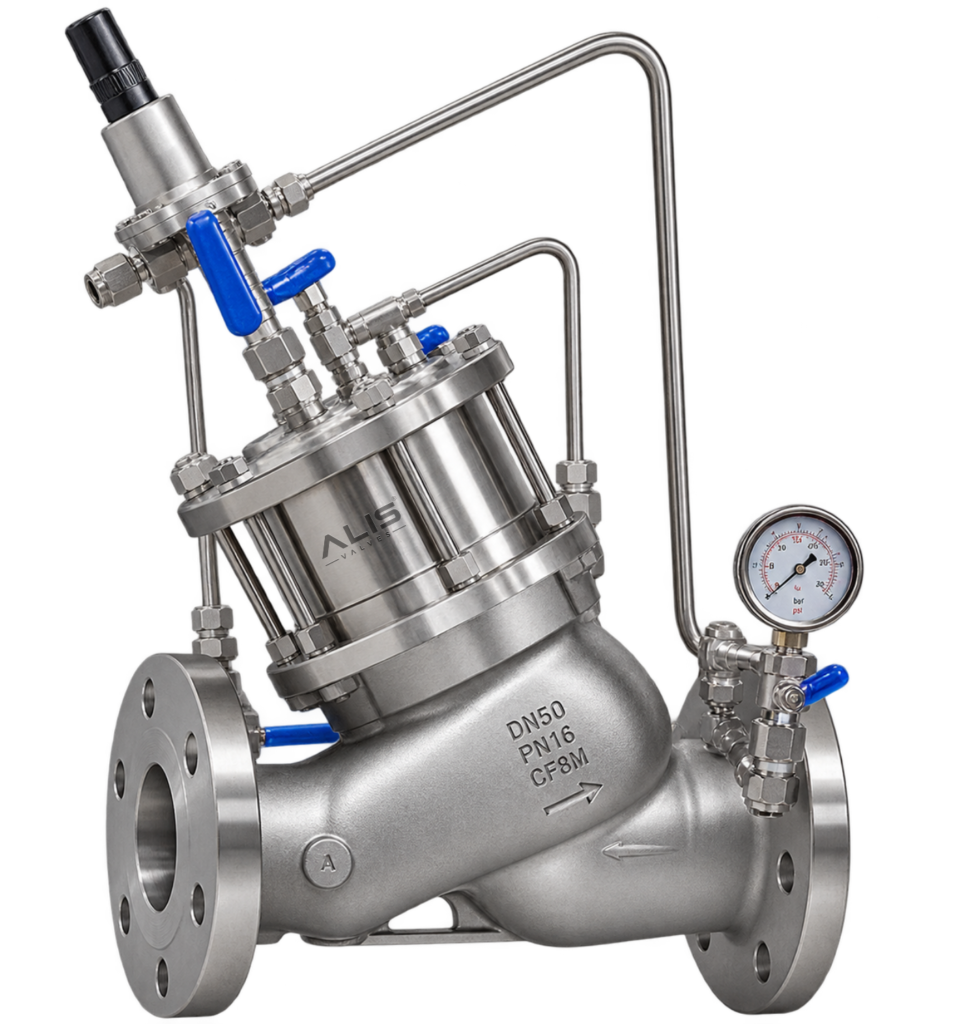
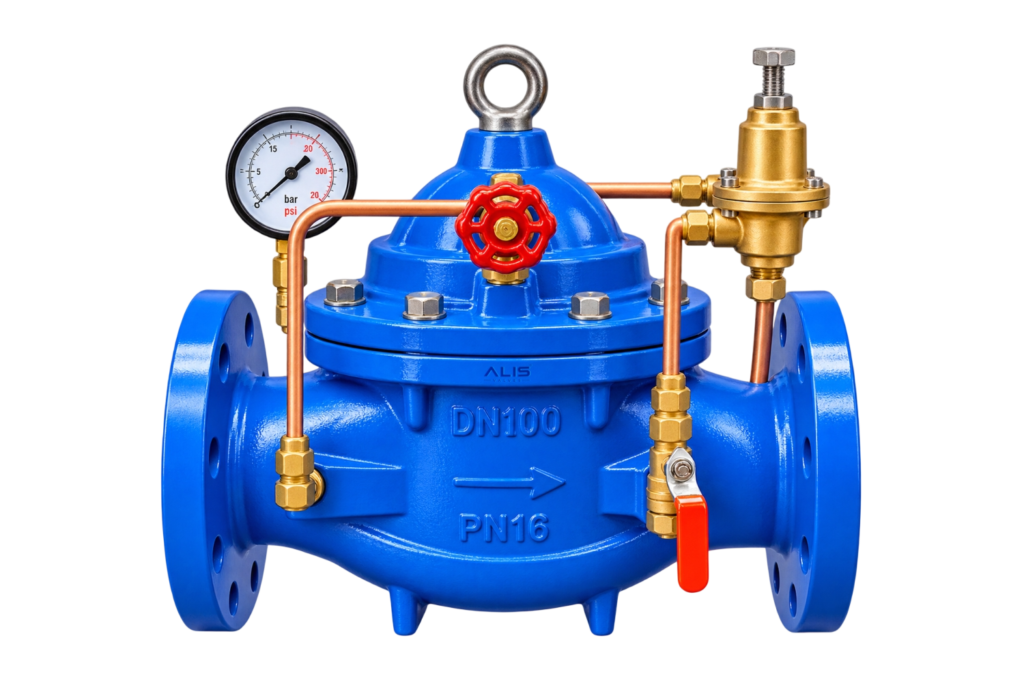
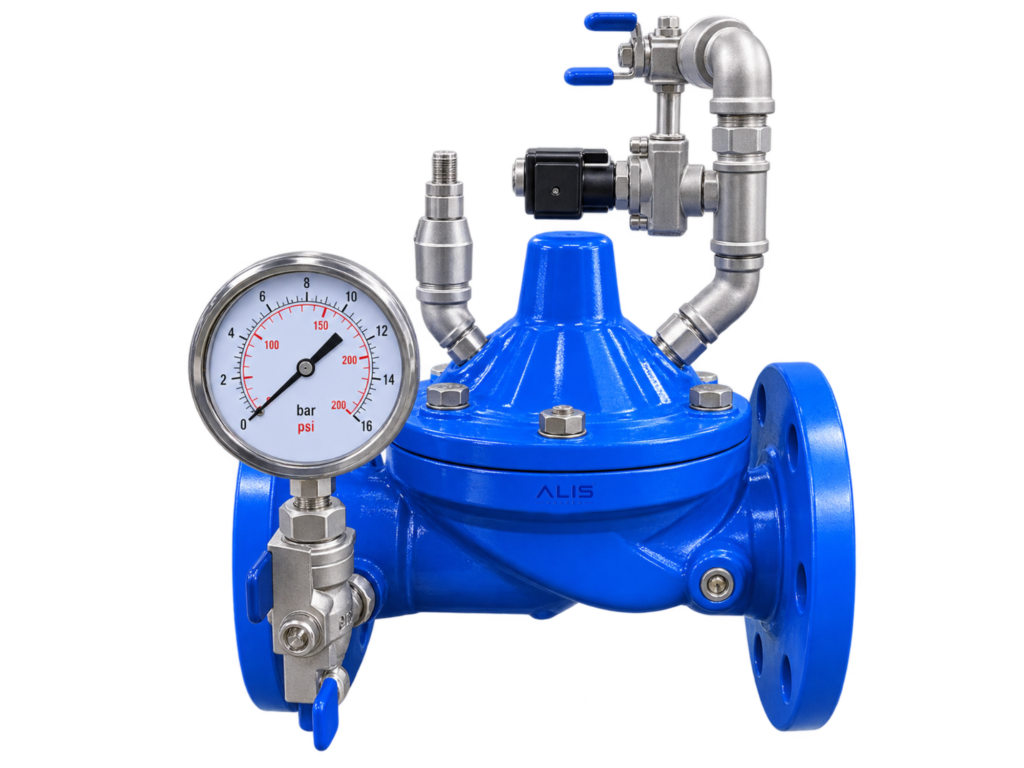
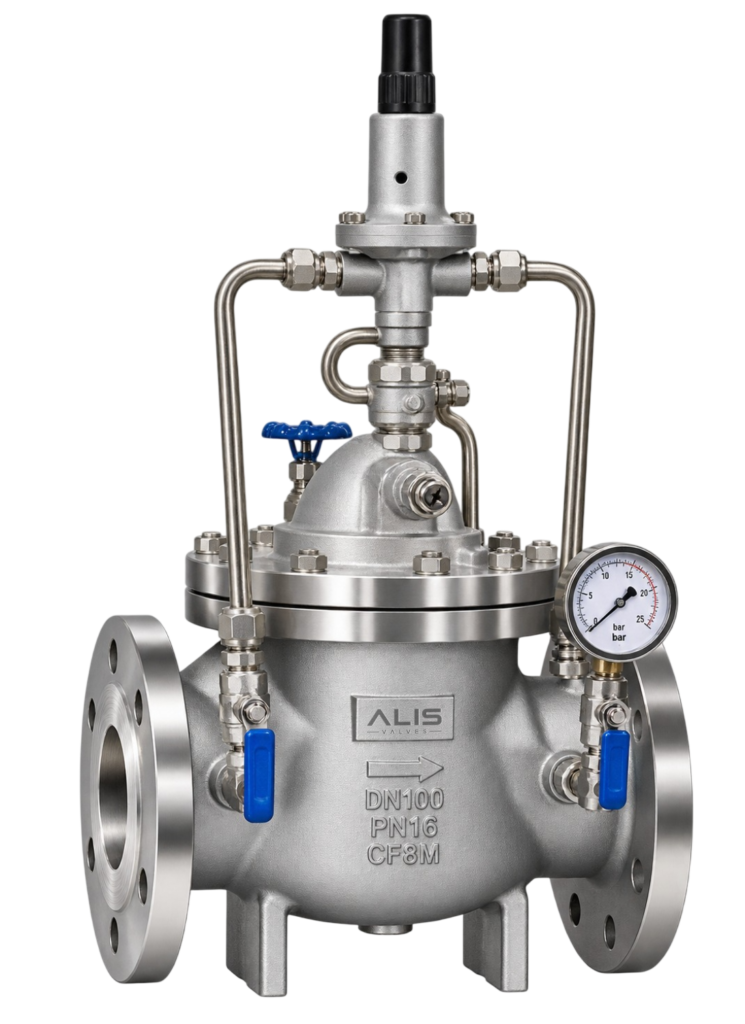
Piston Adjustable Pressure Reducing Valve is designed to reduce and maintain downstream pressure at a preset level, helping protect pipelines and equipment from excessive pressure. Its adjustable piston mechanism allows controlled pressure regulation for water supply, irrigation, water treatment, pumping stations, and industrial piping systems.
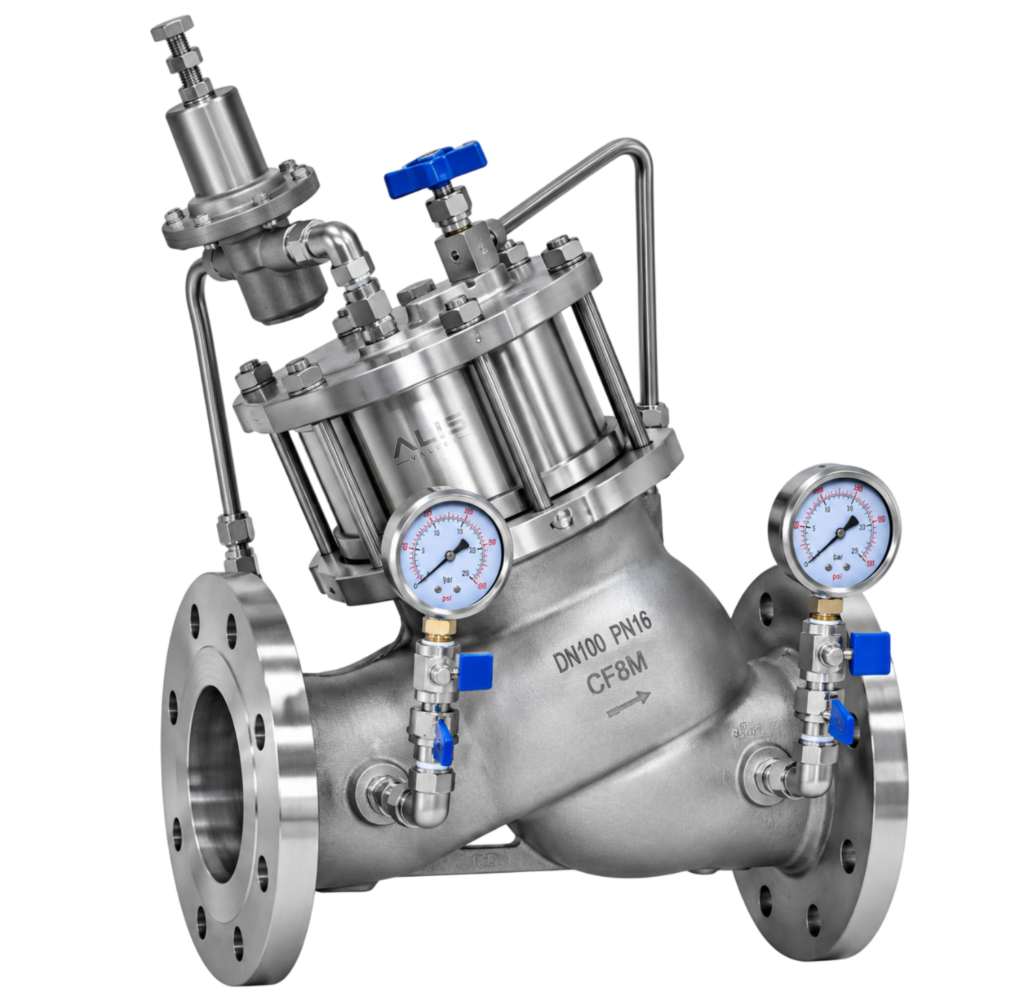
Specifications
Size Range
DN15 to DN100 (½" to 4")*
Maximum Inlet Pressure
Up to 25 bar*
Operating Temperature
0°C to +80°C
Piston Material
Stainless Steel / Engineering Polymer
Pressure Rating
PN16 / PN25 / PN40
Adjustable Outlet Pressure
0.5 to 6 bar / 1 to 10 bar
Body Material
Brass / Ductile Iron / Cast Steel / Stainless Steel
Seat Material
Stainless Steel / NBR / EPDM
Product Images
Frequently Ask Questions
It is an automatic valve that reduces higher inlet pressure and maintains the downstream pressure at an adjustable preset value.
The adjustment range depends on the spring and valve design. Typical designs offer ranges such as 0.5–6 bar or higher.
Many direct-acting piston pressure reducing valves are self-actuated and operate using the pressure difference in the pipeline.
Differential pressure determines the hydraulic forces acting on the piston and must be considered when sizing the valve.
Stainless steel may be selected where improved corrosion resistance or process-fluid compatibility is required.
The piston responds to downstream pressure and changes the flow passage to maintain the required outlet pressure.
For common water-service piston PRVs, 0°C to +80°C is a typical published range.
It allows the outlet pressure to be matched to the requirements of downstream equipment and piping.
A properly selected pressure-reducing valve adjusts its opening to help maintain the required downstream pressure.
Yes, adjustable piston PRVs generally use an adjustment mechanism or spring setting to set the required downstream pressure.